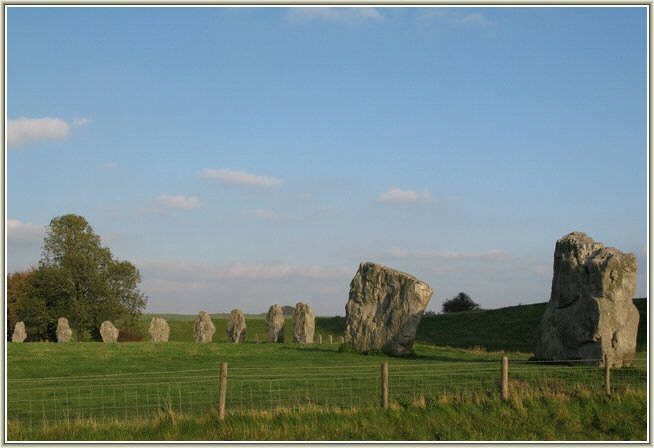
Now it is confirmed that a remarkable number of stones on the eastern side of the henge have avoided the destruction that befell so many others it must inevitably follow that a great deal of argument will now occur as to what will happen to them. One thing must be certain ..........Avebury has such a large variety of people interested in its future that if these stones are not excavated and re-erected there will always be a strong body of opinion that will continue to argue in favour of their restoration. In my opinion not to restore them would be a dishonour to the memory of Alexander Keiller who would certainly have re-erected them had circumstances allowed. It would also be a dishonour to those who laboured so magnificently 4,500 years ago to raise the Avebury Henge. To leave them beneath the ground now that we know they are there must have little merit compared to their worth above it. We may be able to do some clever computer re-constructions of how they may have looked but this can only be a feeble replacement for the spectacle provided by the real thing. In reality the current policy is apparently not to do anything until better archaeological techniques can be developed. Given the present outlook regarding global warming and our other excesses I fear that we will be having to deal with some far more fundamental issues by then and the fate of these stones will have become of minimal importance.

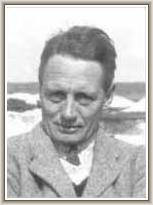
The appearance of Avebury to-day is largely due to the efforts of Alexander Keiller who purchased the monument in the 1930s his wealth coming from the family marmalade business. In a way it is also due to the fact that a good number of the stones were buried for whatever reason during earlier centuries which was to save many from the predations that were to come later.
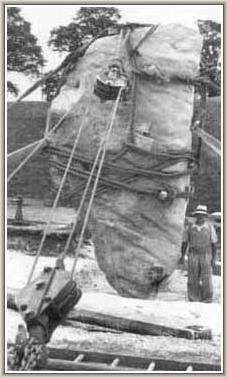
After clearing the parts of the site which nature had re-claimed and emptying the ditches of the accumulation of rubbish they contained Keiller commenced a careful investigation of the henge. Then, using modern equipment and materials, he excavated and re-erected the surviving stones in their original holes mainly on the western side of the circle and along the West Kennet Avenue. Where stone-holes were found but the stones
were missing he marked with concrete plinths. World War Two caused a halt in any further proceedings. Apart from a recent adjustment to the Cove stones nothing to change the appearance of the henge has been done since. Failing health was to prevent Keiller from continuing with his work at Avebury which leaves the eastern side of the monument yet to be thoroughly investigated. He died in 1955.
Alexander Keiller
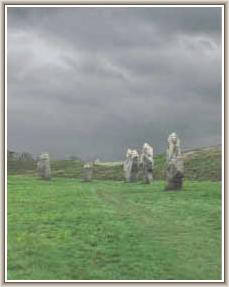
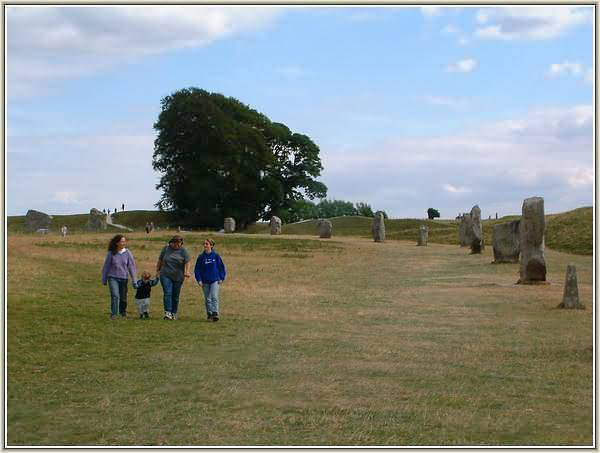
Stones in the SW quadrant
CLICK HERE FOR A PANORAMIC
IMAGE OF THE SW QUADRANT OF THE OUTER CIRCLE
Stones in the NW quadrant
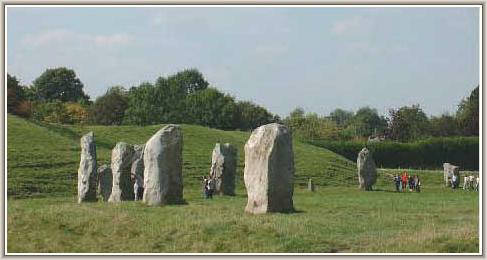
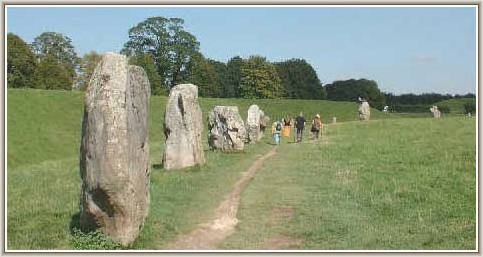
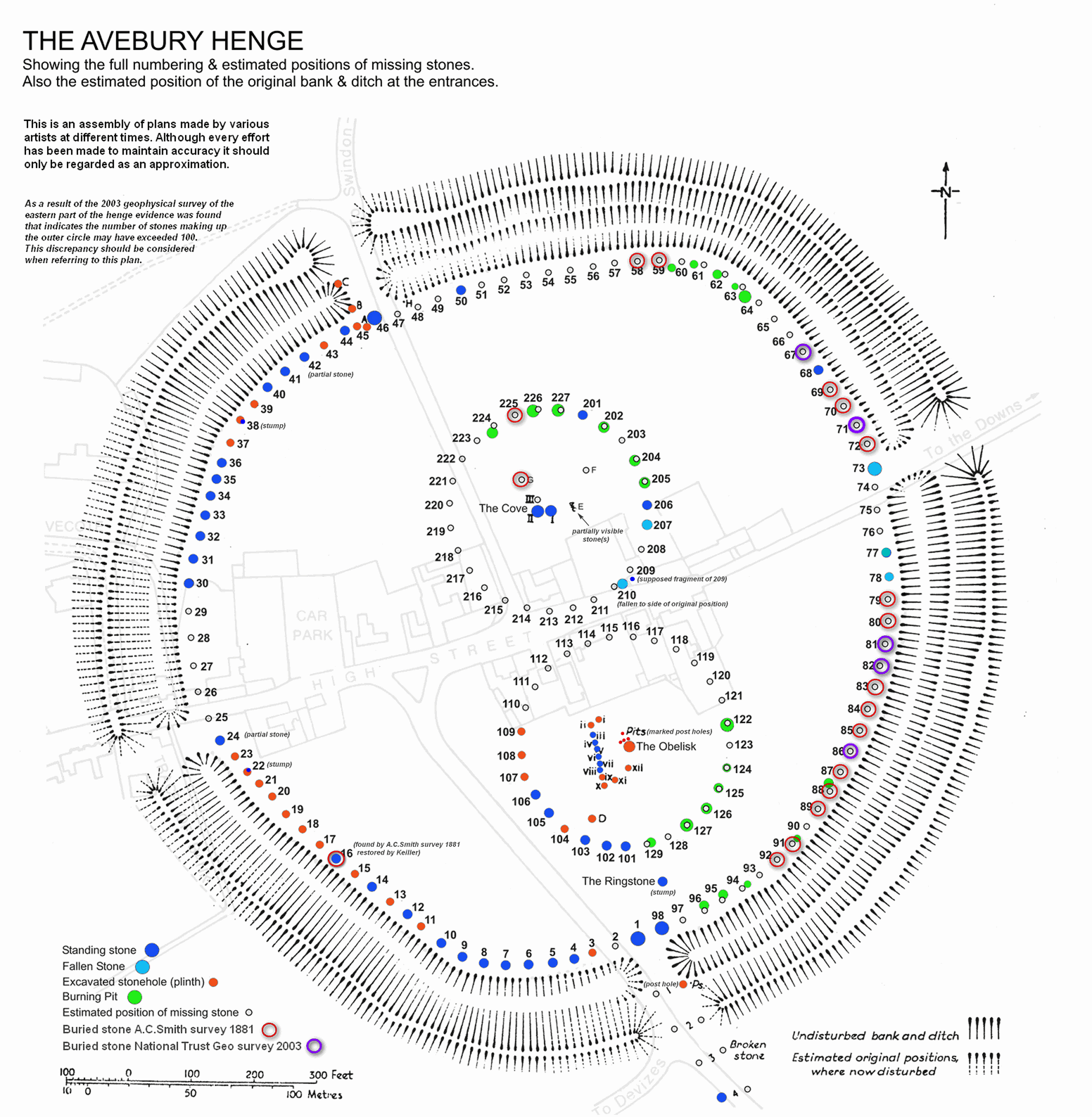
Supervised by A.C.Smith, some searches using probing rods during 1881 indicated that a number of stones remained in the henge which were never to be excavated by Keiller (reported as 16 in the outer circle and 2 in the northern inner circle). In 2003 the National Trust carried out a geophysical survey using somewhat more modern equipment. It wasn't until 2012 that the results of this survey were finally published and it is now known that of the stones located by the 2003 search 5 were previously undiscovered. I am indebted to Nicholas Markwell for producing a summary of the 2003 findings which can be found HERE
The plan of the henge stones has now been revised accordingly.
Again the earlier burial of the stones is proving to be the greatest ally to the preservation of the monument. Whether any of these buried megaliths will ever be given the attention that Keiller lavished on those of the west side and be returned to their rightful positions remains a question that only the future will be able to answer.
Whatever the coming years add to the Avebury story Alexander Keiller's contribution has allowed us all to see the true wonder of what once existed in Neolithic Britain. To compliment his work he also left a very fine museum that contains much of interest for the Avebury visitor.
The stones that now
stand again through his efforts provide a fitting memorial to him.
The monument is now under the protection of The National Trust.
Since Keiller carried out his magnificent restoration of the henge aerial photography and geophysical surveying has revealed some features within the outer stone circle that were previously unknown. Most notable is the evidence of a large double ring of post-holes in the north-east quadrant and a circular feature in the north-west quadrant (see " Surviving Stones" ). Proposals have been made to excavate these features but any such research within the henge is now a sensitive issue so certain hurdles have to be overcome before this can happen.

image size 300K

image size 100K
NOTE: The 300K versions are most suitable for broadband users as
download time with a 56K modem
is usually 1-2 minutes.
BURIED STONES.....a personal comment


CLICK THE BUTTON
for a plan of excavations within the Henge
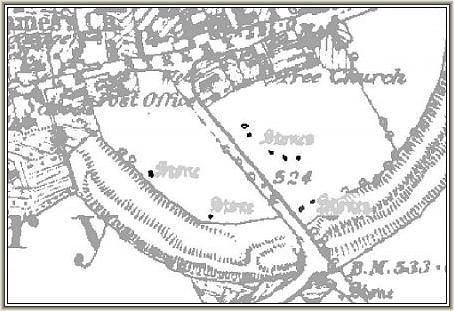
This map from 1889 reveals that few stones were visible in the SW quadrant at that time. The impressive arc of stones we see now and the"Z feature" within the southern inner circle all await discovery by Keiller.
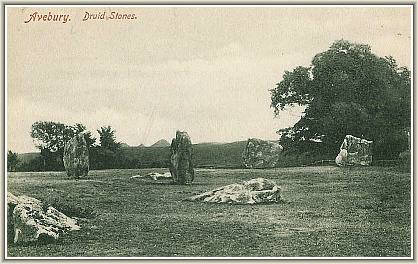
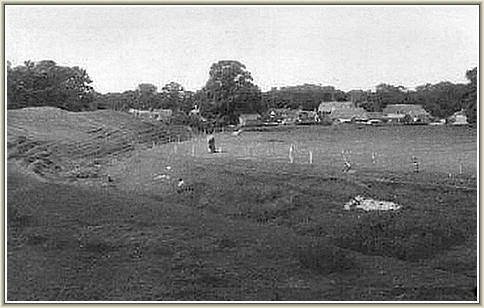
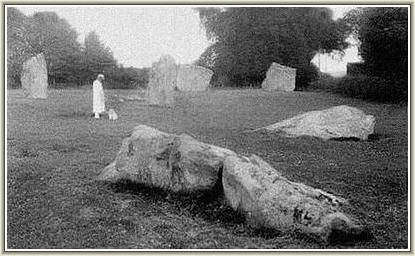
These old images of the southern inner circle show how some of the stones had fallen before Alexander Keiller re-erected them. It is also
interesting to note the long disappeared trees that once stood by the road.
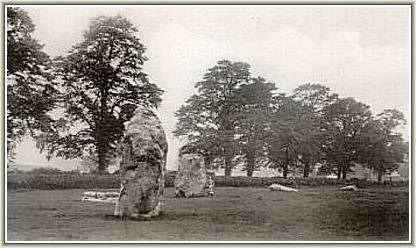
William Stukeley's plan of the henge (see "The Shame" page) indicates that many of the stones in these positions had been demolished so it now seems that however he obtained his information there was some confusion regarding its accuracy.
It is interesting to look at John Aubrey's plan of the henge (see "Aubrey & Stukeley" page) and take note of the stones that are missing around the eastern perimeter. A number of stones that are marked "Destroyed by Tom Robinson 1700" on Stukeley's plan are clearly missing on Aubrey's plan which perhaps confirms they were already buried before Aubrey visited the monument in 1649 and Stukeley's plan is likely to be in error regarding the fate of those particular stones unless they were destroyed in their assumed medieval burial pits. Given Stukeley's attitude toward Tom Robinson perhaps he was a bit liberal in crediting him with a larger "count"than was in fact the case or perhaps Robinson just liked exaggerating !
The south-west quadrant before Keiller's excavation and restoration.








































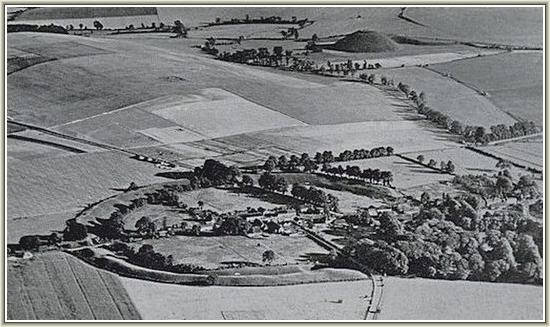
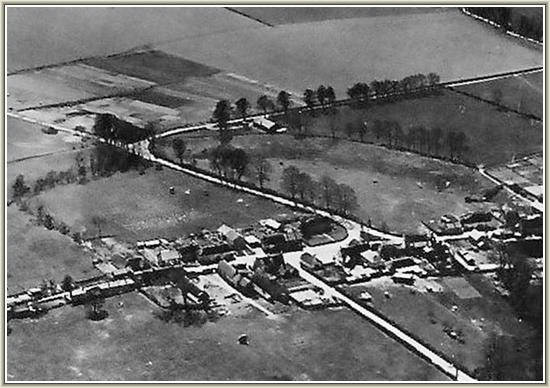
These aerial views from the mid 1930s show clearly the unrestored SW quadrant and how heavily wooded the NW quadrant and the north entrance were before Keiller began his restoration of the henge.

CLICK THE BUTTON
for an account of early excavations within the Henge

CLICK THE BUTTON
for an interesting biography & tribute to Alexander Keiller by Stuart Piggott

CLICK THE BUTTON
for a pre-restoration plan of the Henge
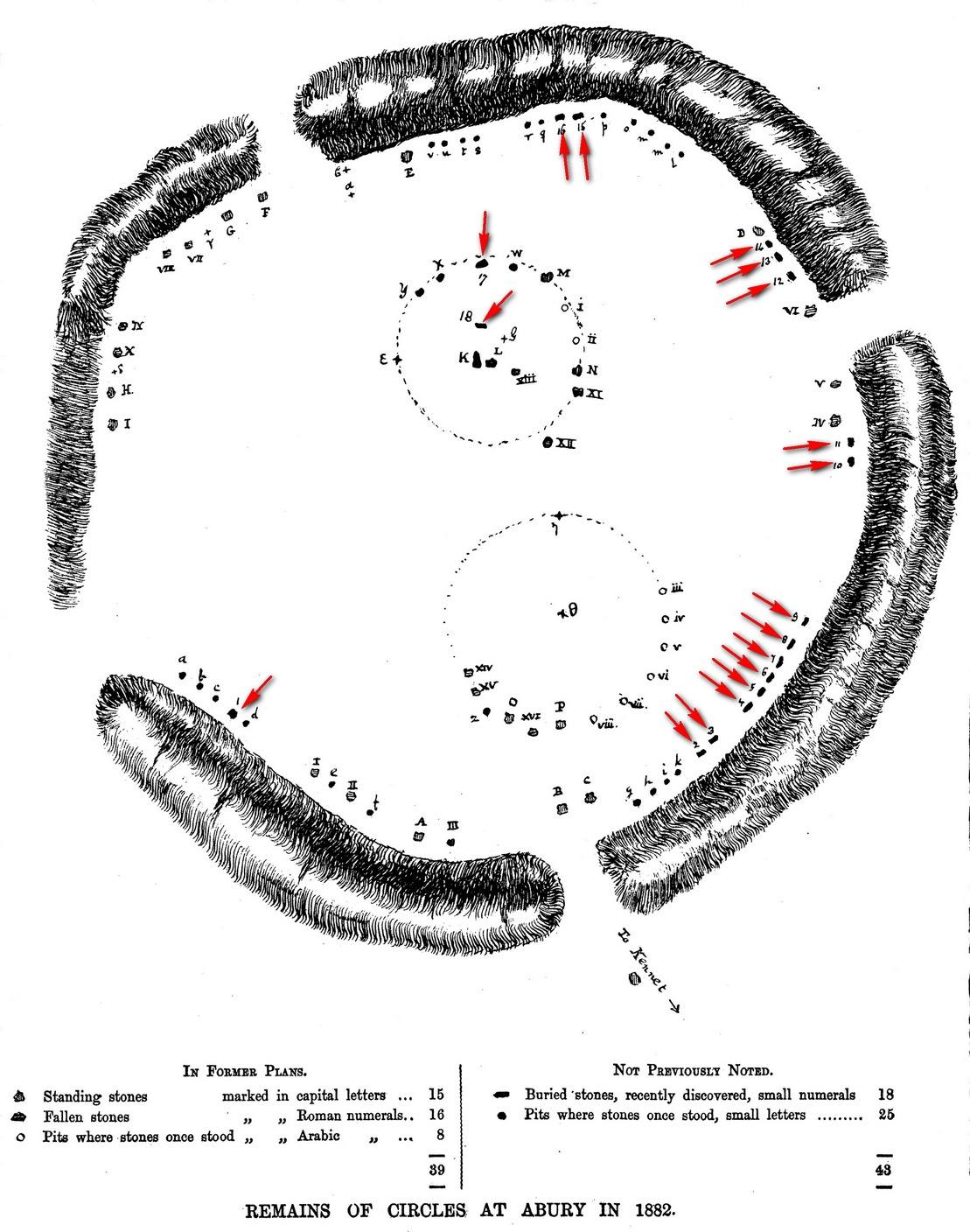
Based on the known buried stones (after 1881 survey by A.C.Smith) this image is a guess at how the south-east quadrant of the henge might now appear if Alexander Keiller had completed his work.